
Why would the AIA Memphis 150 Committee and AMUM focus on Paul R. Williams, an architect who was born in Los Angeles and whose career, though national and international, was largely realized in Southern California?
Memphis has an historical interest in Paul R. Williams. His parents, Chester Stanley Williams, Sr. and Lila A. Wright Williams were from Memphis, where Chester Williams worked at the famous Peabody Hotel, and where Paul’s brother, Chester, Jr., was born before the family moved to Los Angeles in 1893. Decades later in 1960, Paul R. Williams contributed his design for the original building of Memphis’ renowned St. Jude Research Hospital for Children, which was the realized dream of his friend Danny Thomas.
The Paul R. Williams Project is dedicated to expanding public knowledge about this American architect, whose extraordinary accomplishment was achieved against a background of pervasive racism in a particularly exclusionary profession.
AIA Memphis presented the Paul R. Williams project to the national organization, which sanctioned it as part of the AIA150 celebration in 2007 and 2008. This website is a product of the original project.
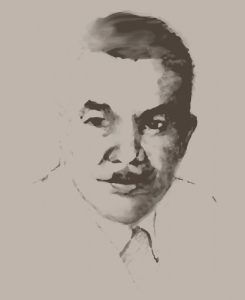
Paul Williams, “I Am a Negro,” American Magazine, July 1937.
Perhaps the most successful Negro artist in the U.S. is Paul R. Williams of Los Angeles….
“Negroes: The U.S. Also Has a Minority Problem,” LIFE, October 3, 1938.
 [/sc_tab][sc_tab tab=”Bibliographies”]The project encourages scholarship at all levels by providing a variety of on-line resources. These resources are available through most academic and public libraries or on the internet. A bibliographic monograph with short annotations and descriptions is available to download as a PDF. This monograph of approximately 1200 entries has been edited from a larger, more complete bibliography that is also available on the project website.
The complete bibliography has 2200+ citations. This resource includes specific references to Paul R. Williams found in books, newspapers, scholarly, architectural and popular publications and ones that relate to the architectural and social contexts of his life and career. Citations are verified for accuracy.
Please feel free to use any of the bibliographies according to the Creative Commons license and guidelines. The Creative Commons license allows the user to download a document and share it with others unchanged as long as the user credits Deborah W. Brackstone, Katherine Broome and the Paul Revere Williams Project at the Art Museum of the University of Memphis.
The resources also include information about publicly accessible archives containing materials relating to Paul R. Williams.[/sc_tab][sc_tab tab=”Exhibition”]Paul Revere Williams, American Architect, was created by and shown at the Art Museum of the University of Memphis from October 23, 2010 through January 8, 2011. It focused on Williams’ leadership in the design of buildings for 20th American century life and his important role as an African-American in the architectural profession and in the civic life of his time.
The exhibition included new and period photographs, short fillms documenting Williams’ career within the contexts of American social history and changes in the built environment.[/sc_tab][sc_tab tab=”Timeline”]The Timeline illustrates how material history, society and the work of one person, Paul R. Williams, integrate and interact. Small changes in society, architecture or life may seem inconsequential, but when connected a powerful picture emerges. The Timeline illustrates how many forces shape our modern life. Williams’ life did not form in isolation but was a product of complex energies in society, his profession and within himself.[/sc_tab][/sc_accordion]
Why would the AIA Memphis focus on Paul R. Williams, an architect who was born in Los Angeles and whose career, though national and international, was largely realized in Southern California?
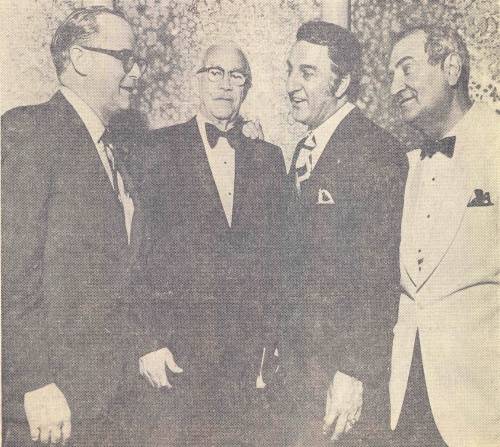
Memphis has an historical interest in Paul R. Williams. His parents, Chester Stanley Williams, Sr. and Lila A. Wright Williams were from Memphis, where Chester Williams worked at the famous Peabody Hotel, and where Paul’s brother, Chester, Jr., was born before the family moved to Los Angeles during the early 1890s. Decades later in 1960, Paul R. Williams contributed his design for the original building of Memphis’ renowned St. Jude Children’s Research Hospital, which was founded by his friend, the Hollywood actor, Danny Thomas.
The Paul R. Williams Project committee’s motivation was and is to help expand public knowledge about this American architect, whose extraordinary accomplishments were achieved against a background of pervasive racism in a particularly exclusionary profession.[/sc_tab][sc_tab tab=”Organizing Committee Members”]
- Lee Askew, III, FAIA, Askew Nixon Ferguson Architects, Memphis
- Terry DeWitt, AIA retired, former principal, Hnedak Bobo Group, Memphis
- Bradford Grant, AIA, NOMA, Associate Dean and Director, School of Architecture and Design, Howard University
- Wesley Howard Henderson, PhD, AIA, Principal, Wesley H. Henderson, AIA, Architectural Services
- Heather Koury, Executive Director, AIA Memphis
- Leslie Luebbers, PhD, Director, Art Museum of the University of Memphis
- Daphene R. McFerren, JD, Director, Benjamin Hooks Institute for Social Change, University of Memphis
- Jimmie Tucker, AIA, NOMA, Self Tucker Architects, Memphis, Past President AIA Memphis
- James F. Williamson, FAIA, Associate Professor, Department of Architecture, University of Memphis
[/sc_tab][sc_tab tab=”Project Contributors”]Deborah Brackstone, with over 40-years experience in academic and special libraries, is the primary research archivist for digital imagery and the project bibliographer.
Katherine Broome, University of Memphis graduate with Museum Studies Certificate, created the entries for the annotated bibliography.
David Horan, University of Memphis Department of Art faculty, project photographer.
Christopher Fitzgerald, University of Memphis Department of Art graduate, project photographer.
Kay Cunningham, Director Christian Brothers University Library, bibliographic consultant.[/sc_tab][/sc_tabs]
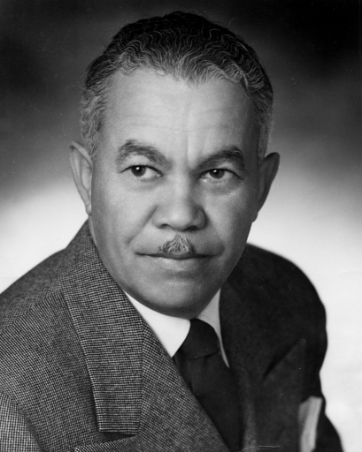
Paul R. Williams, Architect
Paul Revere Williams was born in Los Angeles on February 18, 1894 to Lila Wright Williams and Chester Stanley Williams who had recently moved from Memphis with their young son, Chester, Jr. When Paul was two years old his father died, and two years later his mother died. The children were placed in separate foster homes. Paul was fortunate to grow up in the home of a foster mother who devoted herself to his education and to the development of his artistic talent.
At the turn of the 20th century, Los Angeles was a vibrant multi-ethnic environment with a population of only 102,000 of which 3,100 were African American (U.S. Census 1900). During Williams’ youth the California dream attracted people from across the United States, and they mixed together with little prejudice. Williams later reported that he was the only African American child in his elementary school, and at Polytechnic High School he was part of an ethnic mélange. However, in high school he experienced the first hint of adversity when a teacher advised him against pursuing a career in architecture, because he would have difficulty attracting clients from the majority white community and the smaller black community could not provide enough work.
Williams did not give up. Confident in his strengths, he simultaneously pursued architectural education and professional experience with Los Angeles’ leading design firms while developing social and business networks. Certified as a building contractor in 1915, he was licensed as an architect by the State of California in 1921. Earning accolades in architectural competitions and the respect and encouragement of his employers, Williams opened his own practice and become the first African American member of the American Institute of Architects (AIA) in 1923.
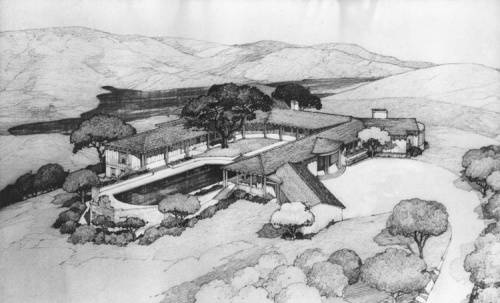
Southern California’s real estate landscape boomed during the 1920s. Williams’ early practice flourished through his growing skills as a designer of small, affordable houses for new homeowners and larger, historic revival-style homes for more affluent clients in Flintridge, Windsor Square and Hancock Park.
As his reputation grew, his practice expanded to include buildings now considered landmarks: MCA, Saks Fifth Avenue, Palm Springs Tennis Club and Golden State Mutual Life Insurance Building. The private residences he designed for leaders in business and entertainment became legendary: actor Bert Lehr, comedians Lucille Ball and Desi Arnaz, dancer Bill (Bojangles) Robinson, popular entertainer Frank Sinatra and the entrepreneurial Cord and Paley families. Residential design would remain an important part of his practice, but commercial, institutional and public commissions became increasingly significant as did his work beyond Southern California, across the nation and the world.
In the course of his five-decade career, Williams designed thousands of buildings, served on many municipal, state and federal commissions, was active in political and social organizations earning the admiration and respect of his peers. He frequently donated his time and skills to projects he believed furthered the health and welfare of young people, African Americans in Southern California and greater society. In 1957, he was the first African American elected a Fellow of the American Institute of Architects.
Paul R. Williams retired from practice in 1973 and died in 1980 at the age of 85.
Williams was awarded AIA’s 2017 Gold Medal, the highest annual honor recognizing individuals whose work has had a lasting influence on the theory and practice of architecture. For more information see AIA’s website.